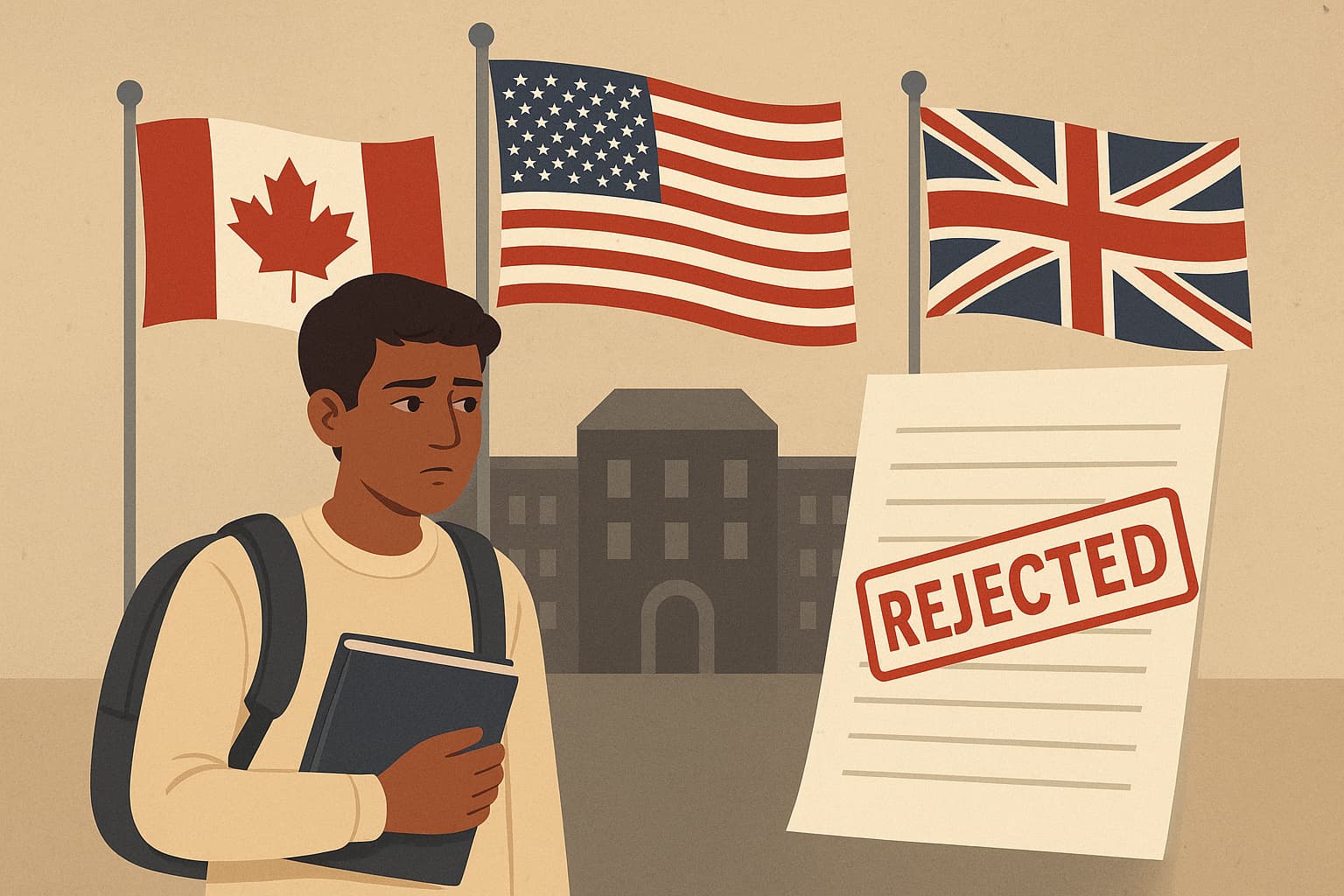
For decades, Indian students have been a vital part of the global education market. But in 2025, the tide seems to be turning. From Canada to the UK, countries once eager to welcome Indian students are now slamming the brakes. The result? Rising rejection rates, stricter scrutiny, and a growing sense of uncertainty about whether “study abroad” still guarantees a brighter future.
Canada, once the dream destination, rejected around 74% of Indian study permit applications in August 2025, one of the highest rates globally. The government cites rampant fraud, fake admission letters, and an unsustainable rise in temporary residents. The new priority is clear: focus on skilled immigrants who can fill labour gaps, not just students.
The U.S. hasn’t seen rejection rates soar like those in Canada, but it’s tightening post-study work options and visa renewals. Policies increasingly favour those pursuing STEM and research roles, leaving humanities and management graduates uncertain about job prospects after graduation.
-
United Kingdom & Australia: The Migration Balancing Act
Both countries are revising student visa rules to reduce migration pressure. The UK has limited dependents and shortened stay-back periods, while Australia has raised financial proof requirements and is aggressively filtering out “low-quality” education agents.
-
Germany & New Zealand: Quiet Caution
Even traditionally open nations like Germany and New Zealand are quietly increasing financial and language requirements, signalling a shift from quantity to quality.
The Bigger Picture
This isn’t just a policy issue; it’s part of a global reset. Around the world, economies are tightening, politics is hardening, and migration is being redefined. Countries are no longer simply asking, “Who wants to study here?” but rather, “Who will stay, contribute, and fit our long-term plans?”
But here’s the uncomfortable truth: those countries being rigid isn’t just about them being rigid; Indian students are also partly at fault. The surge in fraudulent applications, fake documents, and misuse of the study route has damaged credibility for everyone. Unfortunately, the fallout lands hardest on those who genuinely deserve the chance. These sudden changes, while meant to filter out misuse, are also closing doors on thousands of sincere, qualified students whose only mistake was being part of the same system.
At its core, this is about more than visas. It’s about the shifting meaning of “merit”, from academic promise to financial power and employability potential. The world is redefining the boundaries of who has access to opportunities. And as this reset unfolds, the real question becomes: are these rejections fixing a problem, or creating new inequities? For millions of young Indians, that question isn’t theoretical; it’s very personal.