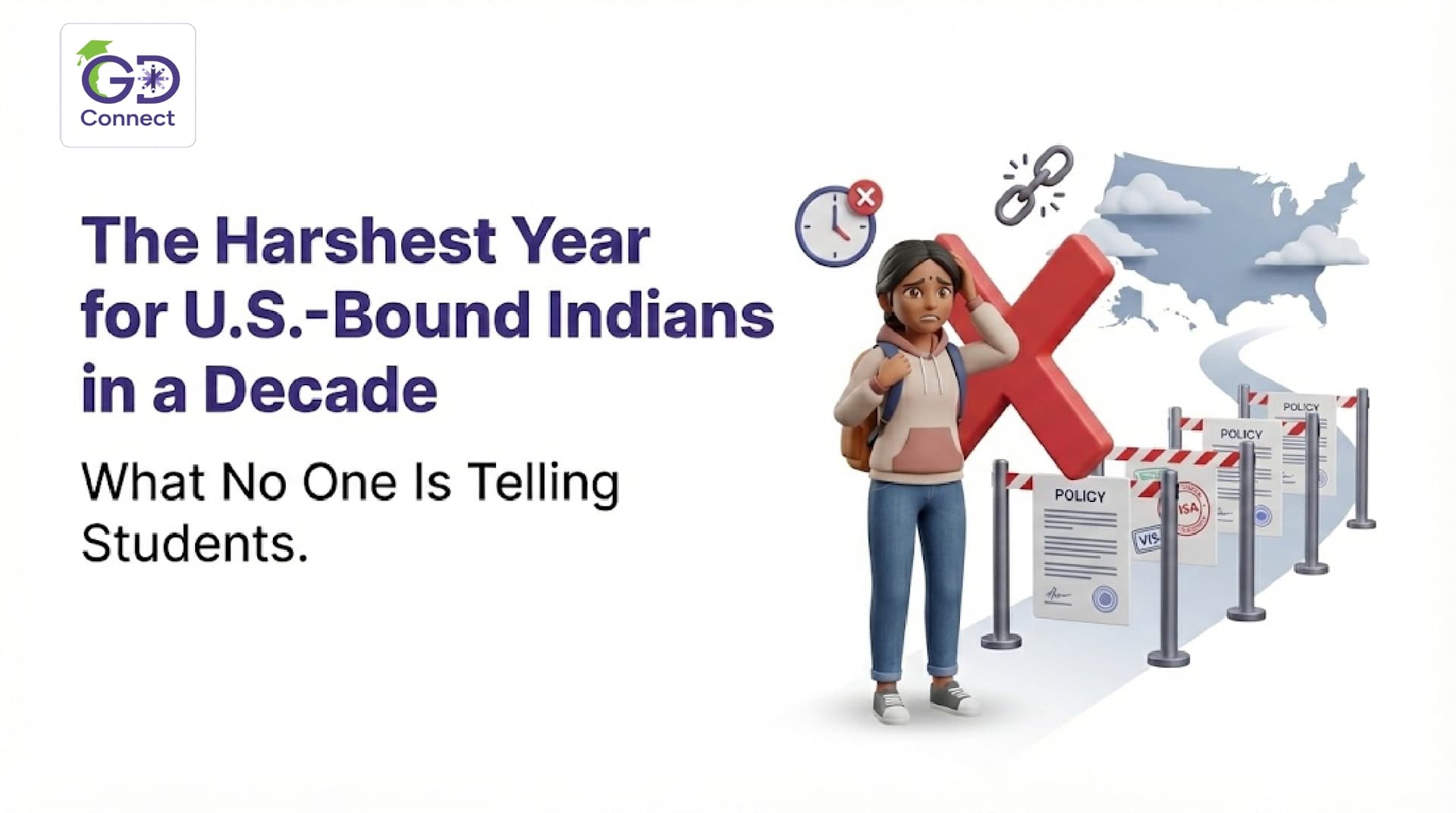
If you’re expecting a simple yes-or-no signal from the U.S. for 2026–27, the truth is more nuanced.
The upcoming cycle brings a mix of encouraging developments and tighter checks: faster processing in some cities, more pathways tied to skills and STEM fields, but also closer scrutiny of documents and online presence. For Indian students, it’s less “crisis mode” and more “stay prepared and stay informed.” The direction is positive, as long as you know how to navigate the new rules. Here’s our expert take on what actually matters for your application.
1) What’s actually changing (Quick bullets you should know)
-
H-1B & work visa screening just got tighter
Consulates are now cross-checking résumés, LinkedIn profiles, job history, and even past roles more closely. Any mismatch or unclear detail can trigger extra scrutiny. -
Social-media vetting is now mandatory, and already disrupting interviews
Hundreds of H-1B and H-4 appointments for Indians were postponed after the U.S. introduced a new rule requiring applicants to keep their social media accounts public for security checks, effective December 15. Interviews set initially for December have been pushed to March 2026, creating months of uncertainty for many. -
If you don’t follow the new rules, you won’t even be allowed inside the consulate
The U.S. Embassy has warned that anyone showing up on the old appointment date after receiving a reschedule notice will be denied entry. -
Wait times are improving, but unpredictably
Cities like New Delhi and Chennai have seen faster appointment movement compared to earlier bottlenecks. But the new vetting layers mean individual cases can still face delays. -
A major bill, the HIRE Act, is back
It proposes increasing the H-1B cap to ~130k. If it passes, it could help skilled workers. But Congress moves slowly, and timelines remain unclear. -
OPT and STEM OPT pathways are facing proposed restrictions
Draft DHS changes could narrow or redefine practical training periods. This is the biggest concern for students who rely on U.S. work experience after graduation. -
There’s a sharp dip in international enrolments
Recent snapshots indicate double-digit declines, with Indian student numbers also softening. This shift could influence policies, university incentives, and job markets over the next 1–2 years. -
Green Card and citizenship processing pauses add another layer to long-term planning
Applicants from 19 “countries of concern” are facing temporary holds, part of the broader tightening under the Trump administration. -
Costs are climbing
A one-time USD 100,000 (₹83 lakh) fee for new H-1B filings has been introduced, significant for employers and something students should be aware of for long-term planning.
2) What students are saying (the mood on the ground)
-
Frustration and panic: Many applicants describe “no slots”, late interview dates, or sudden extra checks that break travel/start plans. Parents and students report emotional and financial strain (deferred admissions, extra months of rent, lost internships). (This is widely echoed across student forums and news interviews.)
-
Caution & pivot: Some students are deferring to 2026–27, switching to Canada/UK/Europe options, or moving to online/delayed starts. Others still apply because a U.S. degree (and its network) remains valuable.
3) What experts and officials say
- Governments and universities stress: Applications are still accepted; there’s no blanket ban, but vetting and rules have shifted. Officials frame changes as “security and policy updates,” while universities warn of enrolment declines and reputational/financial impacts.
- Immigration analysts note a split picture: While processing capacity and some appointment wait times improve in certain cities, policy uncertainty (OPT proposals, fee changes, new screening) creates a chilling effect on demand.
4) The 2026–27 Outlook: What Actually Matters When You Plan
For the subsequent two cycles, the most innovative way to think about the U.S. is not in “yes or no,” but in scenarios. Policies are shifting, enforcement is tightening, and reforms are being proposed, all at once. Here’s the realistic spectrum:
- Best-case scenario, steady tailwinds for students
Reforms like the HIRE Act expand work visa availability, student-friendly bills relax intent rules, and OPT/STEM OPT continue essentially unchanged. Processing stabilises, demand rebounds, and students with clear goals benefit the most. - Middle-path scenario, mixed signals but manageable
Appointment wait times improve, but deeper vetting (résumés, LinkedIn, social media) stays. Students who prepare early, maintain clean documentation, and follow new compliance norms move smoothly through the system. Others may face pauses, RFEs, or unpredictable delays. - In a risk scenario, the more challenging environment becomes the new normal
If proposed rules weaken or cut down OPT/STEM OPT, or if cost and filing barriers rise, employers may scale back international hiring. Universities may face longer enrolment dips, and students may shift timelines or explore alternatives like the UK, Canada, or Europe for 2026–27.
5) Practical advice for Indian students (short checklist)
- Audit your dossier: make LinkedIn, résumé, and public profiles clean and consistent with your application. Mismatches now attract extra scrutiny.
- Have a backup: alternate countries, deferred intake plans, or domestic options matter more than ever.
- Budget for delays & costs: visa timelines, possible reapplications, and new USCIS/filing fees could increase financial pressure.
- Stay informed: follow university international-student offices, embassy announcements, and credible news sources. Policy moves can happen fast.
6) One balanced conclusion
So, is the U.S. welcoming Indian students in 2026–27? Broadly, yes, universities want talent, research funding depends on it, and STEM pipelines still rely on international graduates.
But is the path getting tougher? Also, yes, not through outright bans, but through tighter vetting, social-media scrutiny, résumé/LinkedIn checks, rising costs, and potential shifts to OPT/STEM OPT.
For many applicants in 2025–26, the reality has been uncertainty, extra documentation, and slower movement in patches. The innovative approach for 2026–27 isn’t fear — it’s hedging your bets, planning early, keeping alternative destinations in play, and preparing for higher scrutiny. Students who stay informed and adapt quickly will remain ahead of the curve.
Your Turn to Start the Conversation
We want this to be a conversation starter, not the final word. Share your answers to these questions below:
- If you were starting a master’s in 2026, would you wait for the U.S., or move to Plan B? Why?
- Have you or someone you know faced sudden visa delays or extra checks? Share the experience (anonymously if you prefer).
- Do you think policy tightening will push India’s talent to other countries or back home?