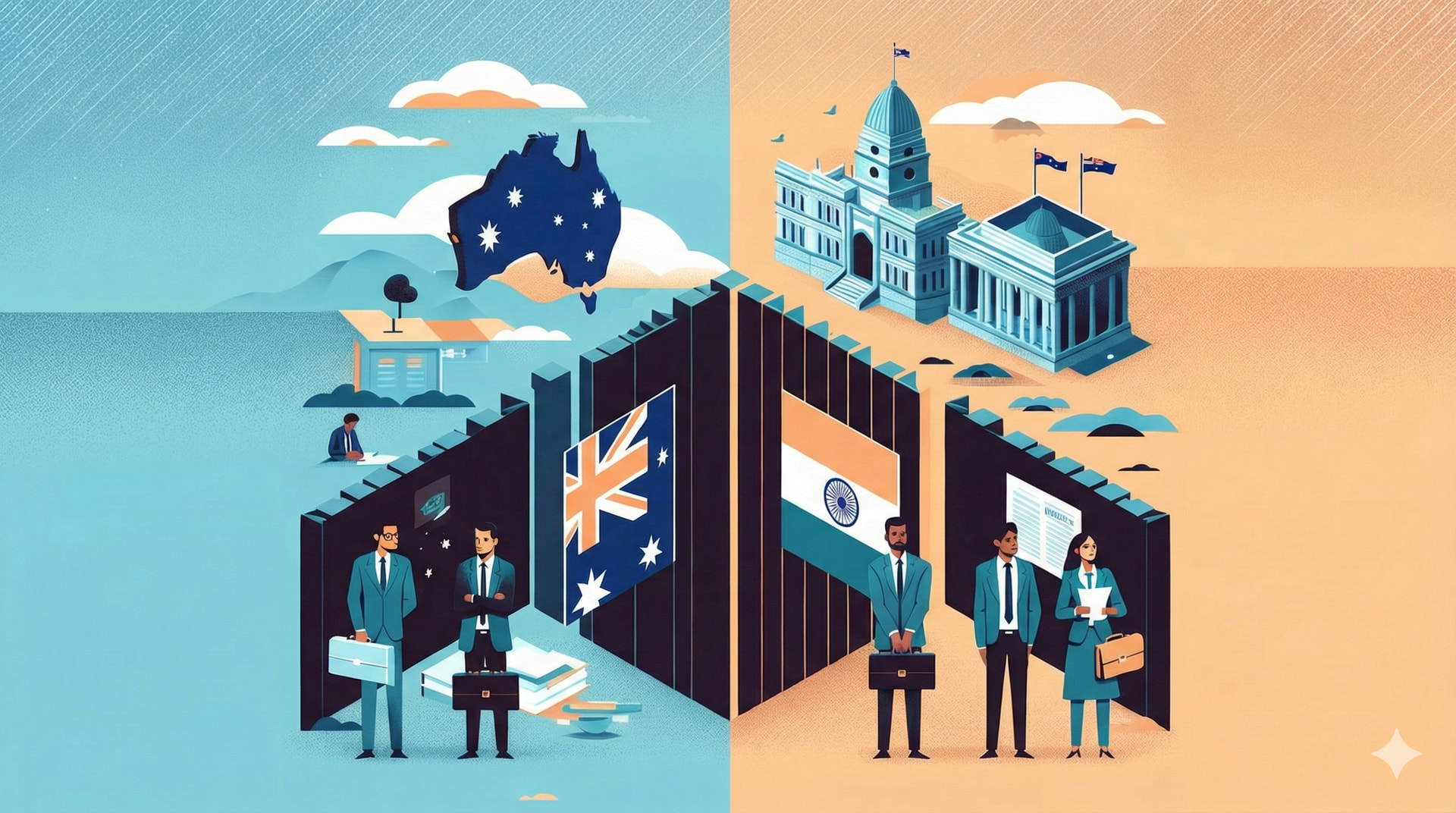
In a recent interview, Australia’s Foreign Minister, Senator Penny Wong, spoke about India’s central role in Australia’s vision for a stable, future-ready Indo-Pacific and emphasised that Indian students are core to that vision.
However, the policy reality on the ground is changing fast.
India has now been moved to Evidence Level 3, the highest-risk tier under Australia’s student visa framework. This means stricter scrutiny, greater documentation requirements, longer processing times, and a higher refusal risk for Indian applicants.
At the same time, structural reforms are being rolled out:
What is actually changing
-
Ministerial Direction 115 (active from 14 Nov 2025) now prioritises visa processing for universities that maintain high academic standards and capped enrolments
-
Low-quality and high-dropout providers are deprioritised, slowing visas even further
-
Financial checks have expanded, with higher living-cost proof and deeper bank scrutiny
-
Visa fees have already increased, raising the upfront cost of applying
-
The fee jumped from AUD 1,600 → AUD 2,000 (about a 25 % rise) starting July 1, 2025.
-
This makes it one of the highest visa fees globally among major study destinations.
-
Additional charges apply for dependants if included in the application.
-
-
Interview calls are becoming more common for Indian applicants
What this means for students
Australia isn’t closing access, but it is resetting who gets through faster. Strong profiles + strong universities move ahead. Weak applications face delays or refusals.
This shift signals a clear strategy: fewer students, better outcomes, and tighter controls, even as Australia continues to publicly position Indian students as valued partners in its education ecosystem.
Confused about how this impacts your profile? Ask seniors, alumni, and experts on GD Connect and get real, up-to-date guidance before you apply.
Source: Visa HQ